

Beer and Talmud
Law, Authority, and Community in the Rabbinic Tradition
with Brian Kresge
What makes Jewish law binding when no one is forced to obey it?
Why do rabbis argue with one another? How can contradictory opinions both become part of Torah? Why does Judaism care so much about seemingly tiny details of daily life? And what happens to a legal tradition when it has no state, no army, and no court with the power to enforce its decisions?
Grab a beer and come explore some surprisingly big questions.
Beer and Talmud is an eight-session journey into the rabbinic imagination of halachah…not simply as a collection of rules, but as a way of creating obligation, authority, identity, and community.
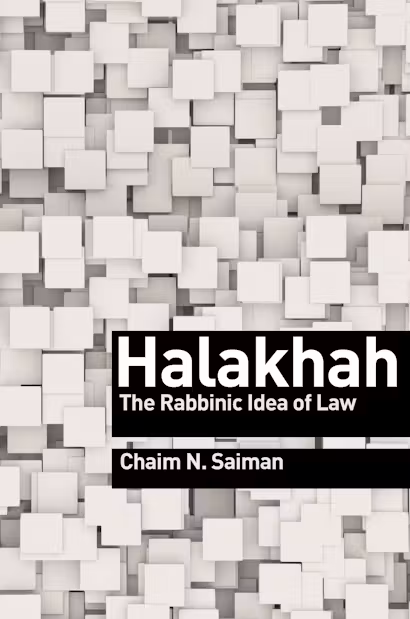
Drawing on the conceptual arc of Chaim Saiman’s Halakhah: The Rabbinic Idea of Law, we’ll follow halachah from biblical law through Talmud and medieval codes and into the challenges of modern Jewish life.
This isn’t a class about memorizing. It’s to ask why the Jewish legal system works the way it does, and whether it continues to work in a world where religious obligation is increasingly a matter of personal choice.
The Sessions
What is Halachah?
We begin with this deceptively simple question. We’ll explore the foundations of rabbinic authority and why Jews might voluntarily submit themselves to a legal tradition.
Beer: Classic Lager
Divine Law vs. Human Interpretation
If Torah comes from God, why does Judaism give humans so much room to argue what it means? The famous story of the Oven of Akhnai takes us there.
Beer: Hefeweizen
Machloket: Disagreement as a Feature
Jewish tradition doesn’t just tolerate disagreement, it preserves it. What does it mean for “these and these” to be the words of the Divine?
Beer: Belgian tripel
Law Without Sovereignty
For most of Jewish history, Jews didn’t control a state. Yet halachah continued to regulate Jewish communal life.
Beer: Irish stout
Ritual Detail and the Formation of Identity
Why does Jewish law care about the little things? Prayer. Clothing. Blessings. Routines. We’ll explore how repeated practices turn law into identity.
Beer: Session IPA
The Yeshiva as Legal Engine
What happens when studying the law becomes almost as important as practicing it? We’ll look at the rise of the beit midrash and how Torah study became a central institution of Jewish authority, community, and identity.
Beer: An Experimental Craft Brew
From Argument to Code
Maimonides. The Mishneh Torah. Joseph Karo. The Shulchan Aruch. Medieval Jewish thinkers transformed an enormous, argumentative tradition into systems ordinary Jews could actually navigate.
Beer: Pilsner
Modernity, Autonomy, and the Future of Halachah
Modern people tend to think of themselves as autonomous. We choose our communities, our practices, and our beliefs. What happens to a system built around obligation? Does halachah survive when observance becomes voluntary?
Beer: A local Maine craft brew
The Book
Chaim Saiman treats halachah as a distinctive legal system, rather than simply asking what it says.
Throughout this book, Saimain connects the technical to the philosophical. A sugya about an oven, a prayer, damages, or a court isn’t just an isolated rule.
Saiman also explains rabbinic disagreement, and complicates the word law. Halachah isn’t simply a Jewish version of a legal code. Its authority, purpose, institutions, and relationship to human autonomy are unique in human history.

Come for the Talmud. Stay for the Argument.
Serious Torah. Big Questions. Good arguments. Cold beer.